Case Study: Nā Hoa Ululāʻau O Kalamawaiʻawaʻawa
South Kona, Hawaiʻi Island
South Kona right now
Captain Cook · Where this food forest actually grows
Loading local time…
—
Feels like --°
- Wind--
- Humidity--
- UV Index--
- Rain today--
Live weather for the actual site, via Open-Meteo.
Most of the design and species detail on this site — the guild example, the invasive-clearing list, the kalo and ʻōlena specifics — is drawn from one real, working site, not assembled from theory. This page is that site, told honestly at its actual current scale.
Guinea grass, maile pilau, cat's claw, Christmas berry
in a single season
in real, active production
The site
Nā Hoa Ululāʻau O Kalamawaiʻawaʻawa is a small (roughly quarter-acre) restoration site in South Kona, on Hawaiʻi Island, working to clear invasive species and reestablish native, food-bearing plants on land that had been overtaken by aggressive introduced growth.
This land sits inside a documented, centuries-old farming system, not empty ground waiting for a new idea. Archaeological research on the Kona Field System shows dryland farming across this district from around AD 1400 onward, and a specific breadfruit-canopy agroforestry belt — the kaluʻulu, spanning roughly Honaunau to Kaʻupulehu — grew kalo, ʻōlena, ʻuala, and ʻōhiʻa ʻai together under open breadfruit canopy across exactly this area. What's growing on this site now isn't a combination chosen for this project. It's the same one already documented here, before cultivation in this spot stopped and the invasive growth described below took over what it left behind. Clearing that growth doesn't start something new — it clears the way to farm the same land the same way again.
What's real and already documented
- Invasive species cleared: Guinea grass, maile pilau, cat's claw, and Christmas berry — all named specifically because clearing them was real, completed work, not a plan.
- Kalo (taro), now growing on land that was previously choked with invasive growth. See How Poi Is Made for what kalo becomes after harvest.
- ʻŌlena (turmeric), producing at real volume — 130 lbs of raw root harvested in a single season.
- A vetiver hedge, planted in contour along the slope, actively controlling erosion — a working example of the technique described in Soil, Water & Establishment.
- Koa replanted after Christmas berry removal — a nitrogen-fixing native canopy species doing double duty: restoring the site's native character and building soil fertility for what's planted beneath it.
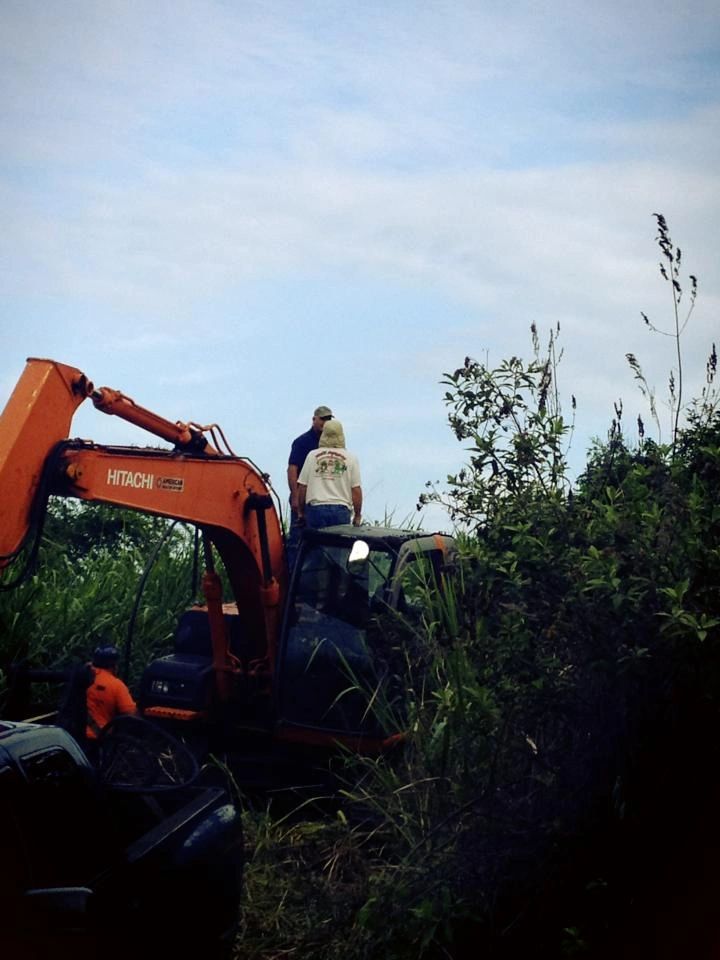
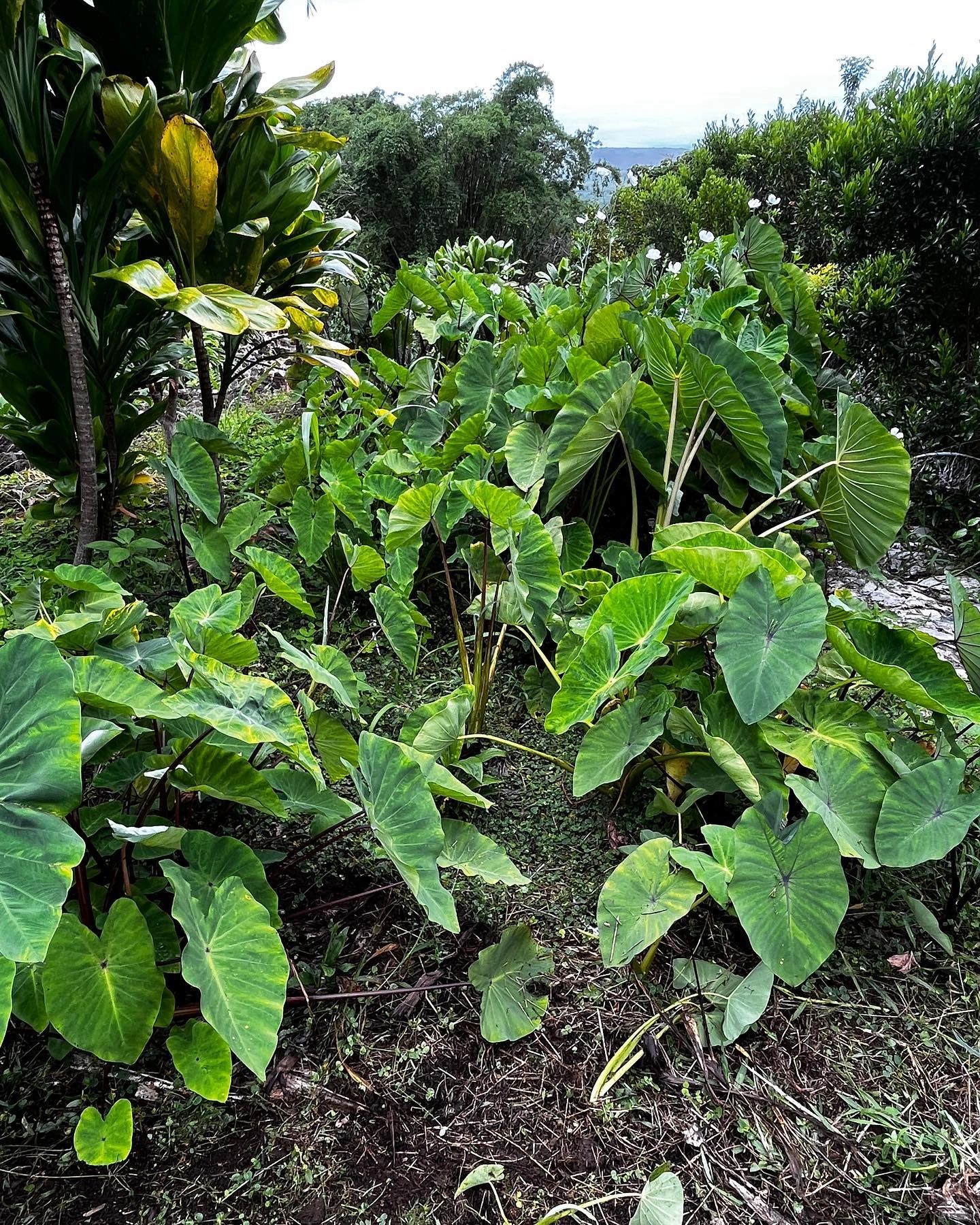
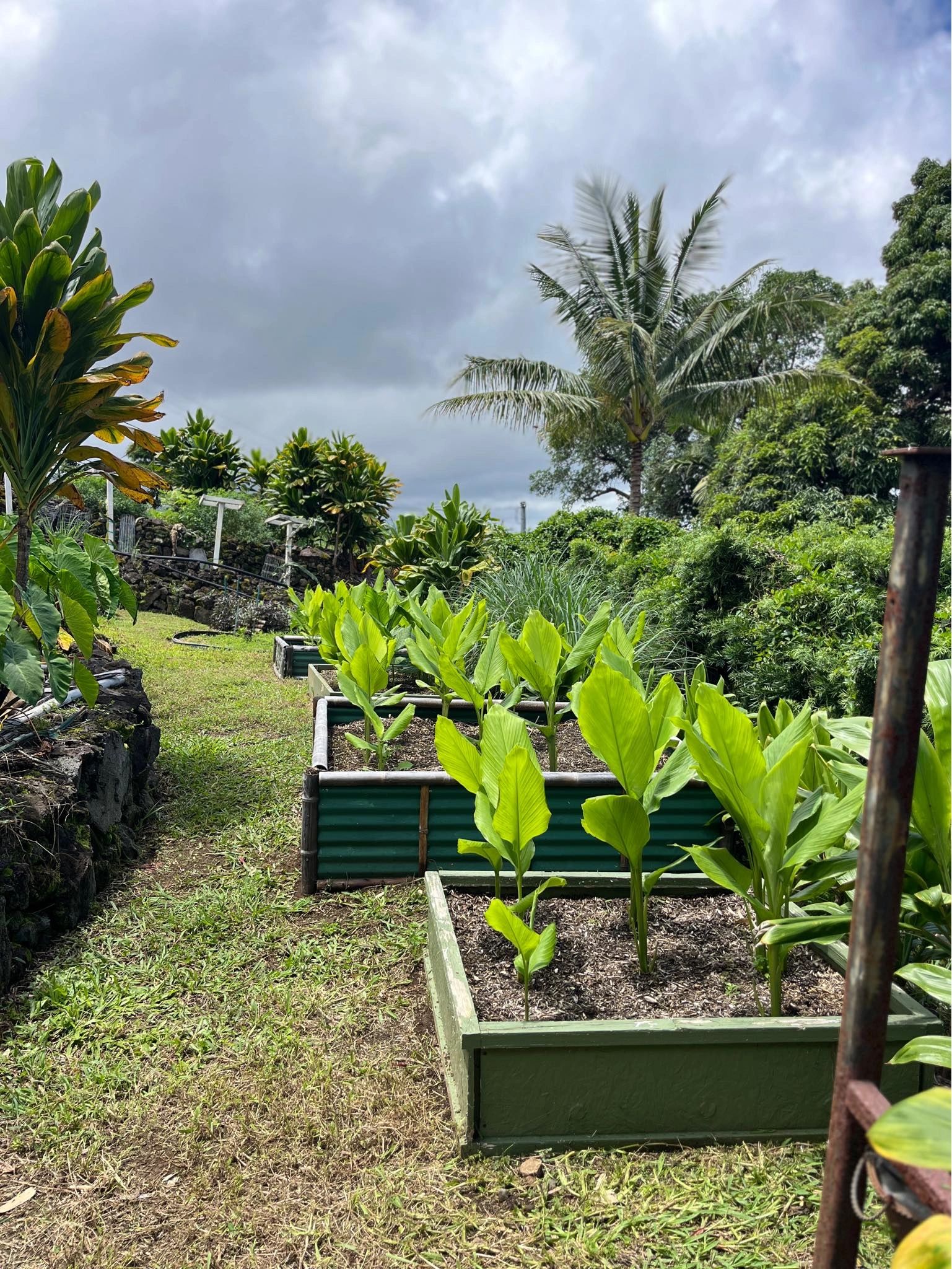
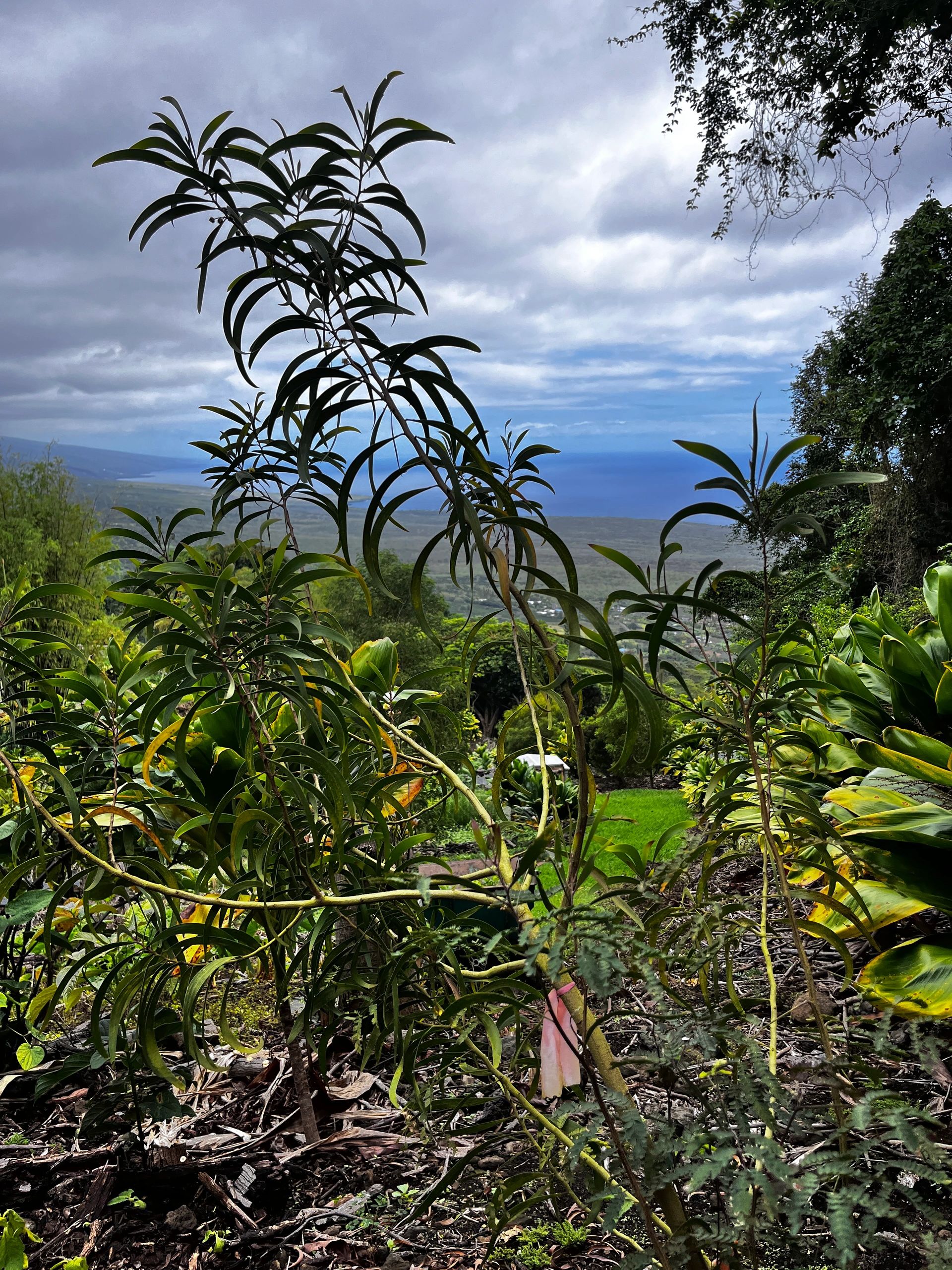
The actual site, not stock photography — clearing, kalo, and ʻōlena beds, South Kona.
What's still early
This is a genuinely small site, still building out its full infrastructure — this case study describes what's growing and producing today, not a finished operation. That's worth stating plainly rather than polishing over: a real, early-stage restoration site with real results is more useful to someone planning their own food forest than a more finished-looking example would be, because it shows what year one-to-three of a project like this actually looks like in practice.
Why this site anchors this website
Every piece of Hawaiʻi-specific guidance on this site — the layer design, the species choices, the clear-before-you-plant sequencing — comes from what's actually working here, not from a generic guide adapted for the climate. And what's working here isn't a new idea being tested against this place — it's a documented system being farmed again, not invented. ʻĀina to Table, the commercial venture this website supports, is partnered with this nonprofit: Nā Hoa Ululāʻau O Kalamawaiʻawaʻawa manages and restores the land; ʻĀina to Table grows and sells from it, bringing labor closer to the profit of the food it grows and building direct relationships with restaurants that value real, traceable sourcing.
Support the restoration work directly
To support Nā Hoa Ululāʻau O Kalamawaiʻawaʻawa directly, get in touch with them here.